The Luminous Life — Why Beauty Isn't a Luxury
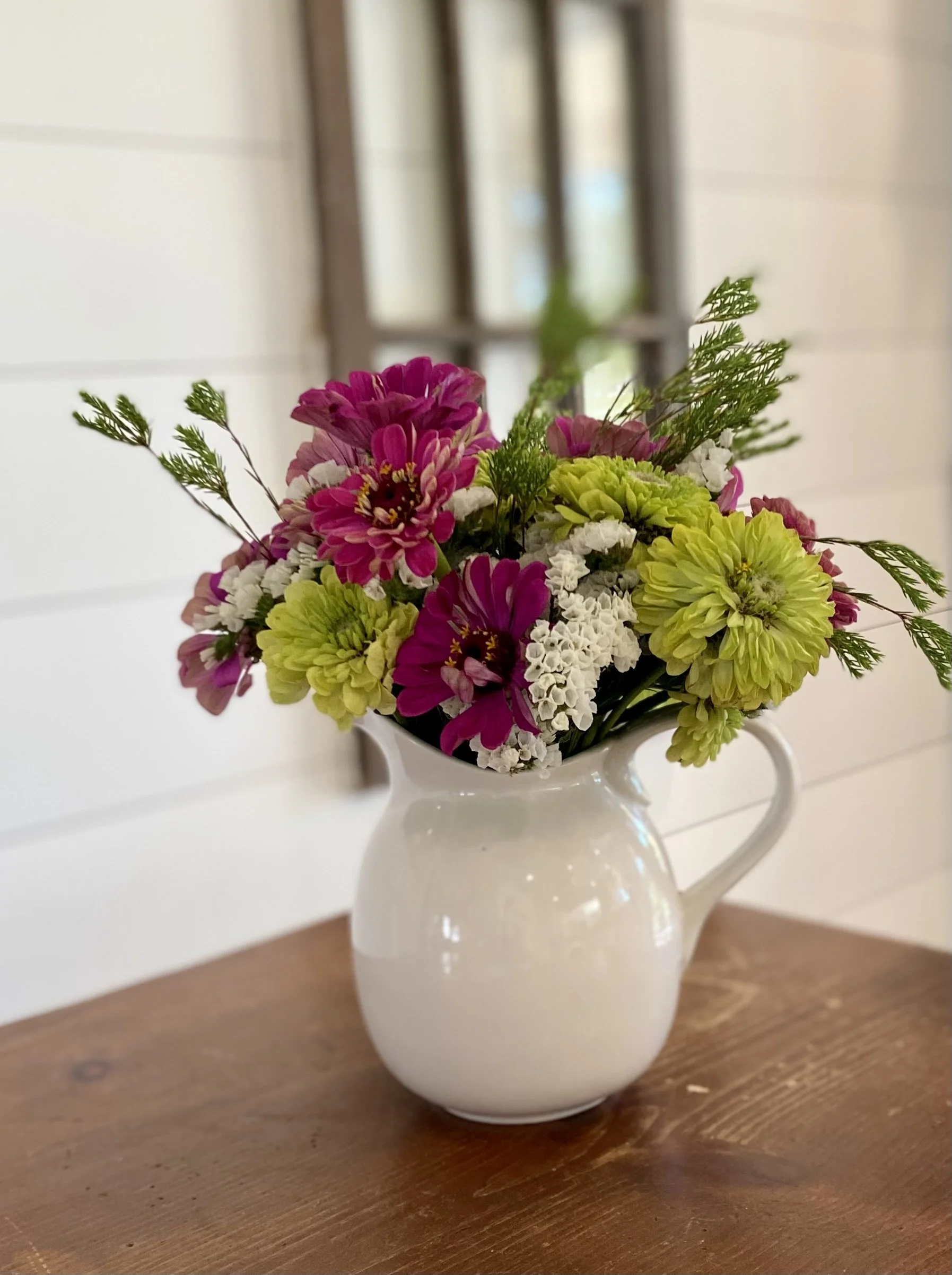
There's a word I keep returning to lately: devotion.
Not in a religious sense, though it edges close to that. More in the way Rainer Wylde means it when he writes: "A meaningful life is created through small devotions to aliveness."
I read that and felt something click into place — the way a key does when it finally finds the right lock.
Because here's what I know after decades of living and building and creating: the things I used to dismiss as trivial are actually the architecture of a beautiful life. The fresh-cut flowers from the garden sitting in a jar on the windowsill. The candle burning while I cook. The music that asks nothing of me except to receive it. The bowl of soup made from scratch that fills the house with warmth before anyone has taken a single bite.
I used to dismiss these things. Call them extras. Indulgences. Evidence of some softness I hadn't fully earned the right to. I was wrong.
The nervous system doesn't lie.
The research is now confirming what so many of us have quietly known: the environments we create around ourselves are not decorative — they are functional. They are medicine. The brain is exquisitely sensitive to sensory input, and beauty is one of the cues it uses to determine: am I safe? Can I exhale? Can I rest?
When I walk into my home — light pouring through the windows, something good on the stove, a small vase of whatever is blooming in the garden right now — my body answers that question before my mind even registers it. Yes. You're safe. You can exhale.
I spent years building spaces for other people too. When I owned my brick and mortar store, I designed the environment with the same intentionality I brought to my home — the light, the texture, the scent, the sense that someone had thought about how it would feel to be there. I didn't have the language for what I was doing then. I know now that I was regulating nervous systems. Mine and everyone who walked through the door.
But this isn't only about our homes.
It's about what we allow ourselves to notice. What we let ourselves follow.
Rainer Wylde says that most people abandon themselves in tiny ways — they stop following their delight, stop trusting amazement, stop believing that awe matters. I think he's right. And I think it happens so gradually that we don't even notice the leaving. We get busy. Practical. We stop pausing for the light falling a particular way across the kitchen floor at 4pm. We stop standing still long enough to be moved.
I used to share what I called daily delights — small moments of beauty I'd caught and held long enough to name. A perfect peach. The sound of rain on the roof. A stranger's laugh. I got out of that practice. I felt it when I did — a subtle dimming, like a room when someone turns the good lamp off.
The science of awe tells us this isn't small. Studies show that experiencing wonder, amazement, and beauty doesn't just feel good — it actually reduces inflammation in the body, modulates stress hormones, and shifts the brain out of threat-detection mode. Following your delight is, quite literally, good for your health.
There's a quote I love — I can't trace its origin exactly, but the heart of it is this: we spend so much energy trying to add more years to our lives when what we really need is to add more life to our years.
Yes. This. Exactly this.
A luminous life isn't built in grand gestures. It's assembled in the accumulated weight of small devotions. The morning ritual you actually love. The walk you take when you could just as easily drive. The flowers you cut from your own garden and put in a jar for no reason other than they're beautiful and they're there. The meal you make with care when no one's coming for dinner except you.
These are not extras. They are the whole point. May we all find more wonder and awe and our lives become absolutely luminous.